The Empath Child
Do you have a child that is highly sensitive, and do you think they could be an empath?
Sometimes it can be difficult to know whether you have a sensitive child, or whether their sensitivity goes beyond the realms of what is classed as 'normal', and whether or not they are in fact an empath.
It is completely normal for some children to exhibit signs of being highly sensitive, but the key is knowing if their sensitivity requires some additional measures to be put in place in order to help them cope with the potential overwhelm.
I, myself believe that my youngest daughter Emma is also an empath, as she exhibits many of the typical traits, and I see a lot of me in her when I was her age.
This is what has led me to research a lot more into how being an empath affects children.
I can remember much of my childhood and still remember a lot of times when my empath traits have come in to play, and when I see my daughter react to situations in exactly the same way I did, I can completely relate to her and what she is going through. This can be tough to navigate if you aren't an empath yourself, so I wanted to share some tips on how you can help your empath child going forward.
*Please note that my content is for educational purposes and not a substitute for professional medical advice*.
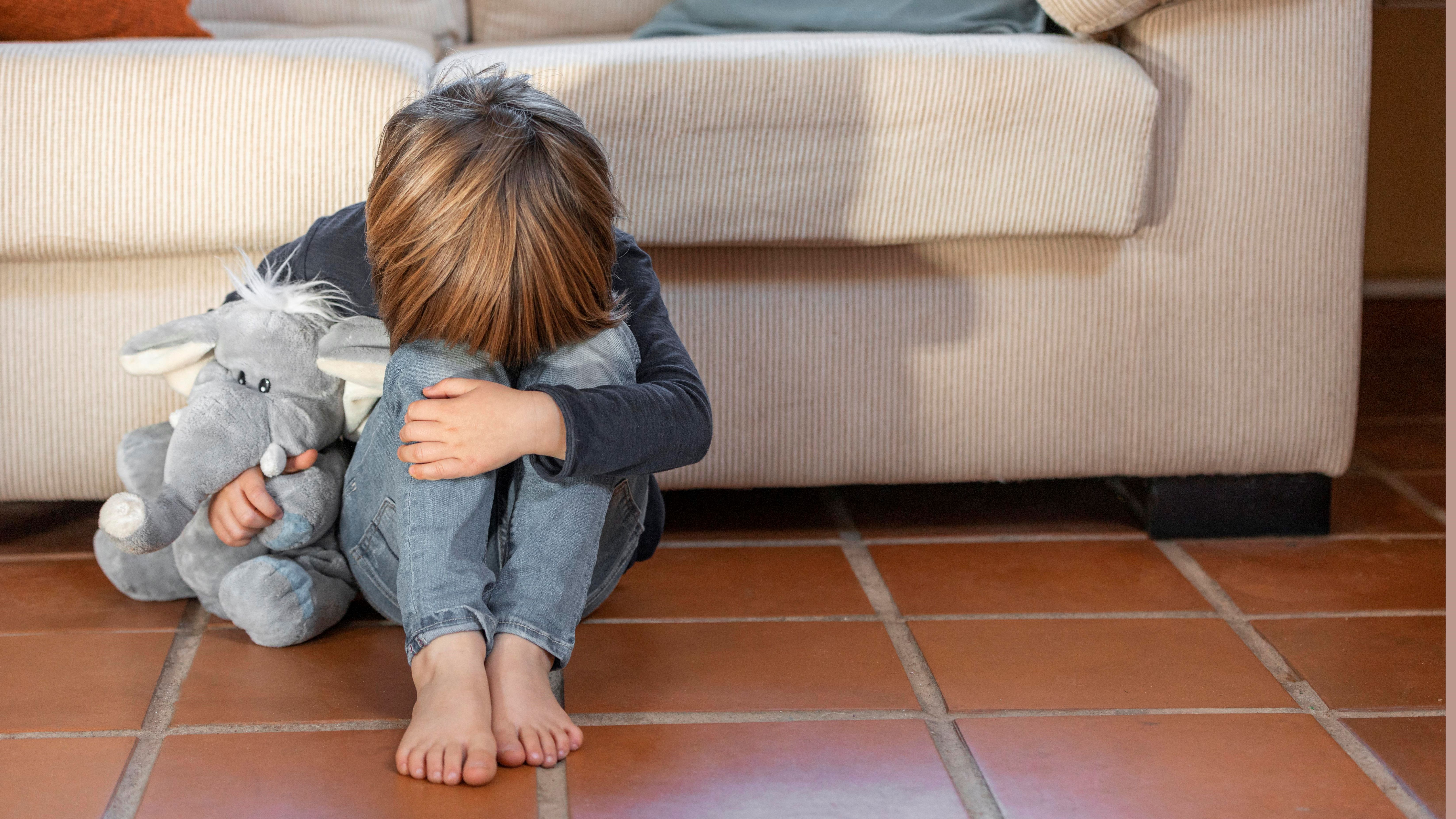
Here are some of the more obvious signs that could mean you have an empath child:
As with adults, an empath child can absorb other people’s emotions and physical symptoms as if they were their own. Key signs include extreme sensitivity to loud noises, bright lights, and scratchy fabrics; requiring significant alone time to recharge after social outings, when they have potentially taken on the stress or moods of surrounding friends and family.
Because an empath child feels things so deeply, their nervous systems can easily become overloaded, leading to sudden tantrums, exhaustion, or anxiety.
This can be particularly noticeable after your child gets home from a school setting and their outbursts can be mistaken for bad behaviour, when in fact your child could just simply be venting and releasing negative energy in the only way they know how.
It can be difficult as a parent to deal with, especially if you notice that your child seems to behave perfectly well around strangers and teachers, or even their friend's parents, but when it comes to you, they seem to let it all out; the acting out, or the embarrassing outbursts in the supermarket, but the truth is, you are the one person that your child feels completely and utterly safe with, and you are the only one that they feel comfortable enough around to show how they really feel. As difficult as it may be, try to take some solace in the fact that they are letting these emotions out, enabling them to disperse all the negativity that they have accumulated throughout the day.
I know that this may seem a little unfair that you get the brunt of their frustrations, but try and look at it from a different perspective... you are your child's 'safe space', and the 'go to' person that they trust enough to be their true self.
You could of course have the opposite, whereby your child doesn't know how to control their frustrations, and they may inadvertently 'act out' in front of their peers and other adults. This does not mean that you aren't their 'safe space', but more often than not, your child is completely overwhelmed and just needs to find ways to handle these situations in a more controlled way.
Things to look out for:
Emotional Sponge:
Your child may cry when a friend is sad, or acts out when you are stressed or angry. They may cry uncontrollably at a sad movie, or their mood changes when around other children with big personalities.
They physically feel what others feel rather than just observing it.
My daughter can get quite distressed if I have to discipline her. She can't bear the thought of me being angry with her, and even if I am not particularly angry, she will pick up on my disapproving look and that is enough to upset her. I have to be mindful of this, and I try talking to her instead, and calmly explain the issue, rather than getting cross.
Sensory Overload:
They have low tolerance for chaotic environments, in particular bright, fluorescent lights, loud music, strong food smells, or tags in clothing.
My daughter will become more reserved amongst crowds, and I can see her withdrawing as the noise stimulus becomes too overwhelming. She also had a thing for socks when she was younger; she would say "they just don't feel right", and would have to change them continuously.
Need for Solitude:
They require frequent, dedicated alone time to process the day and 'recharge their batteries' in particular after school or family gatherings. You will often find that the empath child will sometimes prefer the comfort of their own home rather than going out with a group of friends. This can be worrying for a parent as we want our children to be sociable and have fun with their friends, but you have to be accepting of the times when they just want to be in their familiar surroundings.
Physical Symptoms:
They may frequently complain of somatic issues like headaches or stomach aches without a medical cause, which are often a reaction to taking on the physical tension of others.
My daughter often complains of both of these ailments regularly, and since practicing grounding techniques she has been complaining far less. Before now I was constantly taking her to the doctor, worrying that she may have an underlying illness, but after the all-clear from the doctor we have sat down and talked about her empath abilities, and tried to normalise her emotions and responses, and her health has definitely improved.
If your child suffers with any physical symptoms, please always get them checked out by a doctor first.
Deep Connection to Nature/Animals:
They show an intense, calming affinity for the outdoors, plants, or pets, and are deeply upset by witnessing characters get hurt in movies or books.
My daughter has always adored animals and will pet and play with our dogs for hours.
When her beloved guinea pig died, she took it very badly, and spent a lot of time grieving for him. I remember getting a cushion made with a photo of him on so that she could feel close to him, particularly at bed time when she would often come to me saying that she couldn't sleep because she couldn't stop thinking about him.
I will always remember a time (I shouldn't laugh), but my husband found a slug eating our favourite shrub in the garden, so he picked it up and threw it over our fence into a bush in our driveway, and on witnessing this, my daughter became absolutely distraught, burst into tears, and no amount of reassurance could appease her.
I insisted that the slug would have survived the bush landing, but she was convinced otherwise. She kept saying, "what if his mummy is looking for him, she is going to be so upset that her baby is gone!"
Realising that we were getting nowhere fast, we went out to the bush to try and recover this apparent 'baby' slug. Unfortunately we couldn't find it, and the next few days I was faced with the same barrage of questions.... "do you think he's alive?", "do you think his mummy found him?"
As for my husband?..... she didn't talk to him for at least a week!
My point is.... whenever something bad happens to a person or animal, like me, she will think about the affect that that loss has on everyone involved, and that can be a lot to take on for a child. It is especially difficult if they don't understand why they are feeling the way they do.
All you can do is be understanding and try to comfort and reassure them as best you can, and try not to lose your patience with them.

Ways you can help an empath child:
1. Normalise and Validate
You could tell them: “What you feel is real. You have a special sensitivity that lets you notice things most people miss, and you are special and unique".
I tell my daughter that it's a special 'superpower' and to embrace it.
Just hearing that she’s not 'weird' or 'broken' helps, although I always see being weird as a good thing because in my eyes 'normal' is boring!
2. Grounding Practices (I cover more on this in my e-book if you would like to know more about this, click here).
Grounding is described as a collection of strategies for controlling upsetting feelings, anxiety, or painful memories by refocusing attention on the ‘here and now’ rather than internally on thoughts or emotions.
When they start to feel overwhelmed by others’ feelings, teach them to reconnect with their own body.
- The roots technique:
This involves using imagery and breath to feel anchored, stable and connected to the Earth, similar to a tree with deep root systems.
Follow these steps:
Get your child to sit or stand comfortably with their back straight and feet flat on the ground. Ask them to imagine strong, thick roots growing from the soles of their feet or the base of their spine and extending deep into the Earth. Ask them to take a few deep breaths until they feel calm again. This is a form of meditation that is known to be very beneficial.
.
- Get them to hug themselves and say:
“These are not my feelings. I return them to where they belong.”
- Hold a stone or crystal in their pocket to remind them that they have an anchor.
You can also get them a 'pocket hug' like I got my daughter. She absolutely loves hers and takes it to school in her blazer pocket, and whenever she is feeling overwhelmed or anxious, she takes it out and holds it tightly in her hand until she feels better.
I tell her that whenever she holds it, imagine that I am telling her everything is going to be ok, and that I am right there with her. Every time I take it out of her pocket to wash the blazer it makes me smile.

3. Energetic Shielding (Child-Friendly)
Guide your child in visualisation:
Get them to imagine a bubble of light around their body (any colour they love — gold, silver, red, blue, pink, violet).
Tell them that this bubble lets in love and joy, but blocks out heavy emotions that don’t belong to them, and that any time they begin to feel anxious or feel negative feelings creeping in, tell them that they can 'zip it up' when going into school, crowded places, or any situation that induces anxiety.

Children can respond very well to these 'imagination tools' because they feel like magic — and they work!
4. Clearing Routine
If they come home feeling sick after absorbing too much:
• Encourage a warm shower or bath (water helps empaths 'wash off' energy).
• Movement or dance — shaking out the energy.
• Drawing or journaling how they feel, then ripping up the page.
5. Naming What’s theirs vs. Not theirs
Teach your child to ask themselves:
“Is this my sadness, or did I pick it up from someone else?”
If it’s not theirs, they can imagine giving it back, or sending it into the earth/light.
This builds emotional boundaries over time.
6. Physical Care
Sometimes nausea is your child's body’s way of screaming “too much!”
• Encourage breaks from crowds, screens, and intense environments.
• Make sure they have calming rituals (quiet reading, gentle music, cuddles with you).
What You Can Tell them:
“You have a beautiful gift — you can feel what others feel, but just like wearing a raincoat keeps you dry in the rain, you can put on an energy coat to keep others’ feelings from soaking into you. You’ll still care about people, but you won’t get sick from carrying their sadness.”

With practice, they will learn to distinguish between compassion and carrying other people’s pain.
To Summarise:
A highly sensitive child will get easily overwhelmed by loud noises, bright lights, or chaotic environments, and although an empath child experiences this, they also take on the moods, physical symptoms, and anxieties of the people around them as if they were their own, so it is important that you know what your child's triggers are, and to explain to them that their abilities are a gift and make them unique and special, and are not a curse.
Talk calmly to them, be patient and understanding, and help them protect their energy by using one of the methods mentioned above.
Remember that your child will need a great deal of downtime, validation, and emotional support to prevent burnout and anxiety. Empath children in particular require guidance in learning how to set energetic boundaries and the clear distinction between what they are feeling versus what belongs to someone else.
Having an empath child is such a privilege. To have such a thoughtful, caring, sensitive, emotionally aware, generous, kind soul as your child is truly a gift, and they should know just how wonderful they are. They are a shining light in what can seemingly feel like a dark world at times, and their 'superpower' deserves to be acknowledged.
If you would like to learn more about healing and protection for your empath child, please take a look at my e-book which covers many other techniques and coping strategies that could make such a difference to your child's life.....
If you are looking for ways to better your life and need a little help, please take a look at what my e-book can do to help you on your own healing journey...

I have written this e-book to help you unlock a powerful journey of healing, self-discovery, and transformation, by changing your mindset, healing from within, and creating the life you desire.
You will discover powerful tools including crystal healing, boundary-setting, grounding, meditation, mindfulness, self-love practices, and positive affirmations. Packed with practical guidance and spiritual insights, this e-book will help you find balance, build resilience, and unlock your true empath potential.
It is my aim, and I feel... my purpose, to help you find your inner peace and live a life of serenity, which is nothing less than you deserve.
Your journey to greater clarity, confidence, and personal empowerment begins here.
Please click the button below for more details and to purchase my e-book


Back to Top
- Home
- The Empath Child
Please note that my content is for educational purposes and not a substitute for professional medical advice.